

Finding Meaning
Living a Goodlife

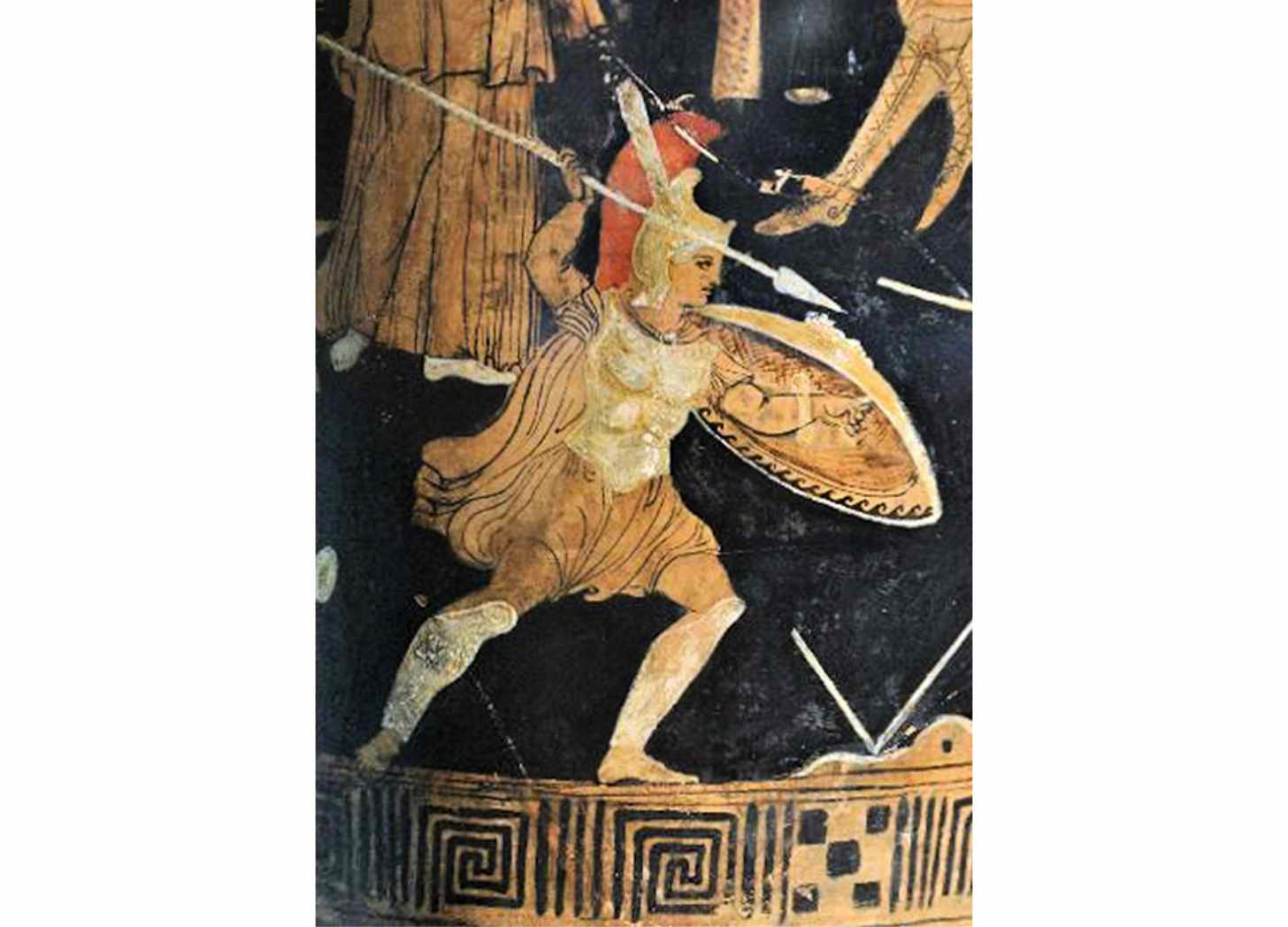
What does it mean to live well? To have a goodlife? In the ancient world, the best men might hope for was to obey the whims of capricious gods, and live nobly and heroically. The dispute between Achilles and Agamemnon immortalized their names in the Illiad. Cuchulainn’s clever and heroic exploits are told in The Taine, and the Old English tale of Beowulf is required reading in many high schools. I’m not sure women had any hope for anything. I doubt being notorious was a goal. Even Helen of Troy hated being driven by Aphrodite.
Until the advent of Christianity, for most people, living a goodlife no doubt included not being enslaved and being left to raise one’s family in peace, an option that was often unavailable. Any given people were likely to be overrun by their neighbors at any point. 20 years was a long run for any king. If they were a good - and strong - ruler, their citizens could have a time of happiness. If they were a bad ruler, then life was hellish and risky.
Christianity didn’t promise life would be better [although ultimately it proved so] but it did hold out the unique promise of happiness after death, a promise that was a threat to the ancient religions. Hades was an unpleasant place, a shadow of life on earth, and men should enjoy the physical world while they could. Women were not encouraged the same way. A man might enjoy himself sexually with slaves, whores, or young men or boys [although a citizen of Rome was to take the dominant role] Women were married, or enslaved in whore houses, and straying outside the bounds of marriage was discouraged by both men and women. A goodlife for a woman of ancient Greece or Rome meant marriage to a man who would raise her children well.
That would seem like a pretty low bar.
While there is a story that there was a time when women ruled the world and everything was wonderful, that story, like the Garden of Eden, is an expression of something other than literal truth. The literal truth is that women have had a hard time of it until quite recently, and the better times are only in the Western world where Christian values have held sway.
So, in this modern world, which is so alien to the one in which we evolved, and different again still from ancient civilizations, what does it mean to have a goodlife? We, men and women, have both more options and very different ones than our ancestors. A man need not be heroic in the dragon-slaying sense to make a difference in the world and be remembered. A woman can do much the same if she chooses, changing the face of history by something as simple as not getting up and giving her seat to a white person.
But is changing the face of history by definition a goodlife? Rosa Parks certainly never sought that. The woman was tired and wanted to rest. In an earlier era, she would have been immediately beaten, or perhaps killed outright for her rebellion. But Western culture had moved and changed, and instead of dead or crushed, she became an icon, honored in the same Western culture that had mandated she sit in the back of the bus. [And yes, she endured a great deal of anguish.]
Compared to our ancestors, we live strange lives. The Western world is wealthy. Even poor people here have refrigeration, air conditioning, entertainment, and access to food if they’re willing to jump through some hoops. But video games, food, convenience, and guilt-free sex - for either men or women - don’t create a goodlife.
What we do have is the ability to take responsibility for our actions. We are no longer obligated to pursue revenge for a kin killing, and slavery is illegal in most of the world. In the Western world, we have some say in who creates laws and how they are administered. And women have more control over our lives than at any time in recorded history.
Because we can choose, it’s easier to pursue the guidance provided by the still, small voice, and create meaning in our existence. The answer to the question of why we’re here matters in terms of how we live our lives and can matter a great deal in how we treat others. Meaninglessness, and nihilism, lead down a bad road. Depending on the social structures surrounding the person who finds the world meaningless, that person may decide to leave in a blaze of glory so that they’ll be remembered like Achilles. Or at least so they hope.
But that behavior certainly doesn’t make life better for the rest of us.
My mother is 93, and struggling with dementia. I asked her recently if she’d ever thought about why she was here, and she said she’d never thought about it. Yet I have no evidence that my mother ever succumbed to the tragedy of nihilism. Unlike many older people I’ve heard about she’s pleasant and nice to be around, and her caregivers and my cousins love her. I believe that is because she was always active in her community. Before Covid, she volunteered, went to church, sang in the choir, and took myriad art classes. She had people around her, as humans were meant to. In hindsight, I think the isolation we all endured is what threw her onto the diminishing path she’s on now.
I don’t know how many people look for meaning when they’re young. I did, but I had trauma and isolation. My mother didn’t. Her childhood was normal for her era, and she grew up on a rural farm in a large family, and with two natural parents. I suspect we are more likely to start a search for meaning when we get older. Things can look pretty bleak if a person hasn’t been doing things that leave them to look back and say, “I made the world better.” I think I can fairly say that my mother did. She made mistakes, but she did her best to treat people well, and there’s nothing trivial about that. It means that when it’s her time to go, she will have people around her who love her for who she is.
It can be so easy when we’re young to think that we have loads of time to make big choices and focus on serious things. But it is these things that give life meaning when we’re older. It is big commitments and communities that keep us from losing track of who we are. Choosing to take responsibility is what gives us a goodlife. A life of meaning instead of a life of emptiness.
I hope you’re living a goodlife. I am.
Selina Rifkin, M.S. [Nutrition], LMT, has been to Hades in a handbasket. More than once. This has given her some opinions. Like most of her generation [X] she’s okay with snark. Most days she tries for good writing. But the snark, and side comments do creep in. She lives with her husband, and is Mother of Cats; four boyz and one cranky gurl. Selina has written The Young Woman’s Goodlife Guide: Things I Wish I’d Known When I Was 20. Or… Learn From My Pain, and How to Train Your Cat: Using a Clicker and Leash to Keep Your Indoor Cat Happy and Healthy. She’s currently working on the Goodlife Guide to Nutrition.