

Women and Voting
It's not just about women

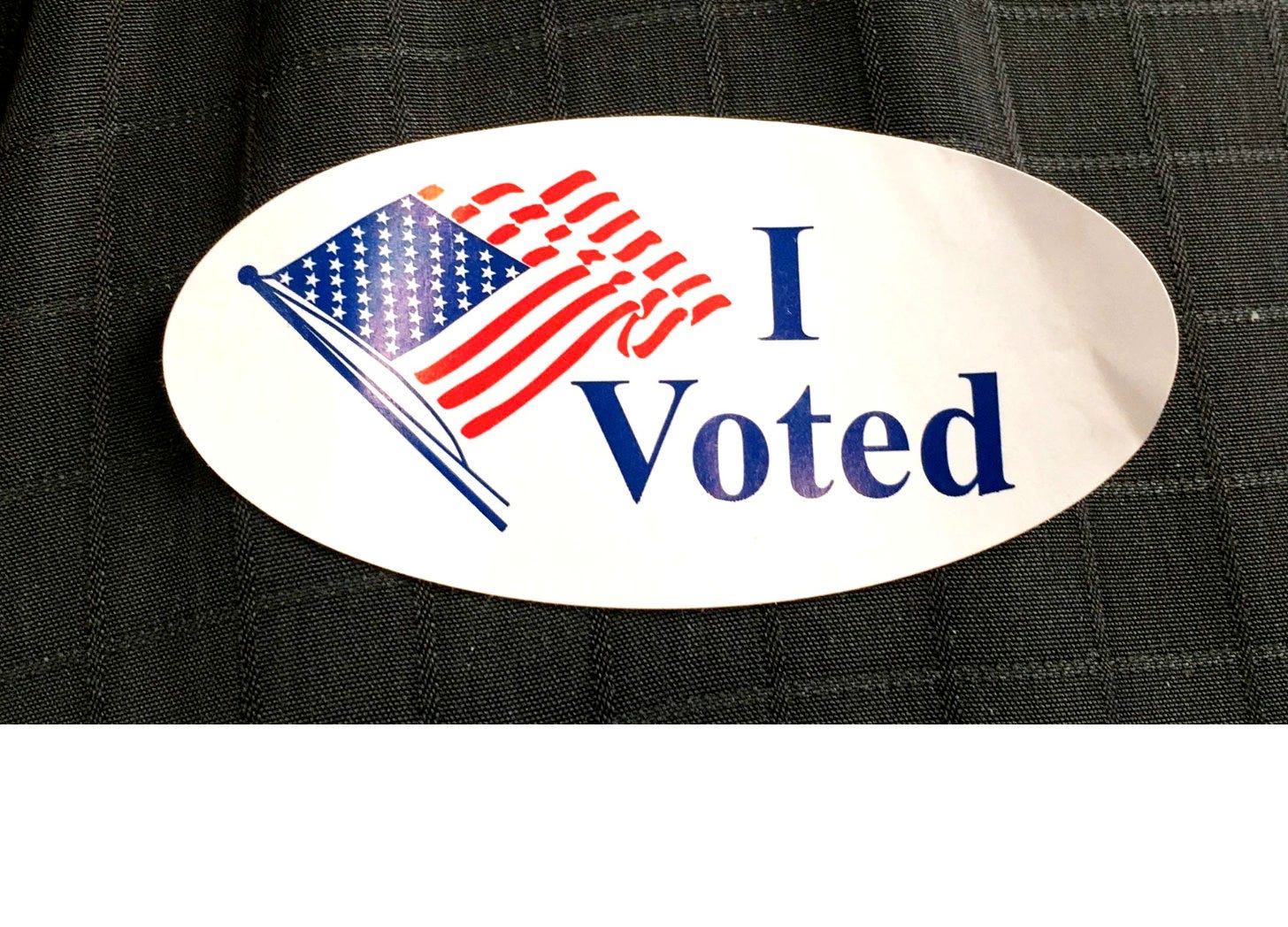
I get to vote. And there’s a small percentage of the US population who would be just fine with removing that right. Some of them are female. As much as feminists would have us believe that women’s suffrage was in universal demand, that wasn’t true back then, and it’s not true now. The Thinking Housewife reposted this last year. She gives a list of myths about women’s suffrage and some counterpoints. While the sources aren’t cited, the arguments are worthy of discussion given what I’ve been learning about the history of feminist thought and the realities of the differences between men and women.
Which is controversial but it shouldn’t be.
So who gets to vote? Currently, some cities allow anyone, anyone at all to cast their ballot. They don’t have to be paying taxes to the city, let alone federal taxes. I take exception to this. My unspoken agreement with the government is that they take my taxes and put them to use on things I approve of. Otherwise, why should I agree to hand over my money? But if people who aren’t citizens are voting on how to spend my money, how do I know it’s going to be things I’d approve of? I know a lot of women who are big on personal boundaries who don’t seem to think that national boundaries matter.
In Athens, not every citizen got to vote* because not all residents were considered citizens. The author of Ten Myths [I’m assuming her name is Laura Wood] points out that in early America, only property owners could vote. Poll taxes excluded some voters later on, and in Great Britain, clergy weren’t permitted to serve in the House of Commons.
While I don’t care about clergy in England, I think some qualifications for voting are worth discussing. Maybe attending and speaking at a caucus and convincing a certain number of people. Or maybe a certified civics class. [Yes, of course, I can see problems with both of these.] Or maybe we should go back to property owners. After all, women can now own property, and that’s good. Once you own property you know about things like property taxes, insurance, and mortgages. How many renters know what their landlord pays for these things? Certainly, I had no idea until I decided to own property myself. It can be a hell of a lot of work, and the risk is high.
Mrs. Wood points out that there’s no evidence that women were interested in the politics of the time and that the sole purpose of women’s suffrage was to change society as a whole. The former could be debatable [Is there a historian in the house?] the latter is clear. I know WAY too many women who are self-proclaimed ‘one-issue voters.’ There’s nothing good for society about having people who look at one aspect of life and vote based on that one thing. This is both willful blindness and irresponsible. There is far more to life than any person’s opinion on X. X should always be balanced with other social concerns and discussed in open forums before voting.
When women didn’t have the vote, we also might or might not be able to own property. Even as late as 1968, my father was able to trade in my mother’s car for one he preferred and she wasn’t able to do anything about it. Before the vote, we had little recourse when a married partner became abusive. My mother chose poorly, but without a no-fault divorce, I would have had an alcoholic parent. That’s not an improvement over no father at all.
Even Carrie Gress in her book The End of Woman: How Smashing the Patriarchy Has Destroyed Us describes the horrendous abuse endured by Mary Wollstonecroft’s mother at the hands of her father. Anne Bronte - one of the lesser-known Bronte sisters - wrote fiction that put the reader in the place of women who had no recourse.
Was this treatment the norm? No. Or no children would have survived. But men are by nature more aggressive than women. Marriage most often brings out their better nature, but not always. No one should have to stay in a situation like that if they want to leave.
And that may be part of the problem. Women still stay with abusive men. Even now when divorce is perhaps too easy, women stay with men who beat them, verbally abuse them, or gaslight them. Been there, done that, got the tee shirt. I lived with an abusive man for a year and a half. After I got free, I spoke with many women who had been through it. Most stayed longer [or much longer] than I and praised me for getting out so fast. It took me years to recover.
Are women responsible for that? There’s apparently some literature about how women are more susceptible to Stockholm Syndrome, which is probably a good evolutionary survival tactic for the smaller half of the species. If a woman won’t leave such a relationship, will they vote for the best interests of the community or will they vote - or not vote - as their partner dictates?
I don’t think women should be excluded from voting. We are half of the human population and the feminine viewpoint matters. Not because it’s inherently better, but because women work and contribute** and so we should have the option of a political voice. Wood points out that many women didn’t want the vote. Maybe those women recognized that the right to vote comes with responsibilities. We are responsible not just to other women and to the rights of women, but to society as a whole: men and women together.
*Athens wasn’t a democracy, they had a sortition system.
**Being a homemaker counts as working and contributing. I will fight anyone on this.
Selina Rifkin, M.S. [Nutrition], LMT, has been to Hades in a handbasket. More than once. This has given her some opinions. Like most of her generation [X] she’s okay with snark. Most days she tries for good writing. But the snark, and side comments creep in. She lives with her husband, and is Mother of Cats; four boyz and one cranky gurl. Selina has written The Young Woman’s Goodlife Guide: Things I Wish I’d Known When I Was 20. Or… Learn From My Pain, and How to Train Your Cat: Using a Clicker and Leash to Keep Your Indoor Cat Happy and Healthy. She’s currently working on the Goodlife Guide to Nutrition.
This article really voices aloud many of my own thoughts as a woman on this subject. Yes, I want the right to vote; I am a citizen of this country bound under its laws and I wish to have a say in those laws. However, as pointed out above, voting brings responsibility with it. I have the responsibility to learn the issues, to research who is running, to use my discernment and wisdom to vote for the candidate that I believe will be the best representative of my will. That means I may have to compromise on one issue to get others I want. I may not care for the candidate personally or that candidate may not be popular, but if they have a record of voting for what I find important, then I need to put my personal dislike apart, be an adult, and vote for them.
And like you say above, this is a male and female issue - both these days seem to be failing at really taking the time to understand what is at stake and what the records are of those who are on the ballot. I've heard the argument that women shouldn't be allowed to vote because they are too emotional and just vote on what the man looks like or if the candidate is a woman. But you know what? I grew up in a state where the men in the union voted blindly for whatever candidate they were told to by their union bosses or straight ticket no matter what the candidates actually stood for. How is this any different?
I agree that perhaps there needs to be a discussion on who can vote. Perhaps the voting age should be raised; perhaps you should be required to have a basic civics understanding before you vote. Was the property owner limitation from the beginning of our constitution correct? I don't know, but seeing how things work today, how easily people can be manipulated to vote for the bread and circuses without any concept of the stakes behind the show, maybe we do need to start a mature, reasonable discussion on this topic. Throw away the retoric, quiet the caustic accusations of whatever -ism can be levied against anyone who has a view, and be reasonable adults who can discuss and debate a subject reasonably.