

We Are Not Clockwork
The mechanistic lie of modern culture

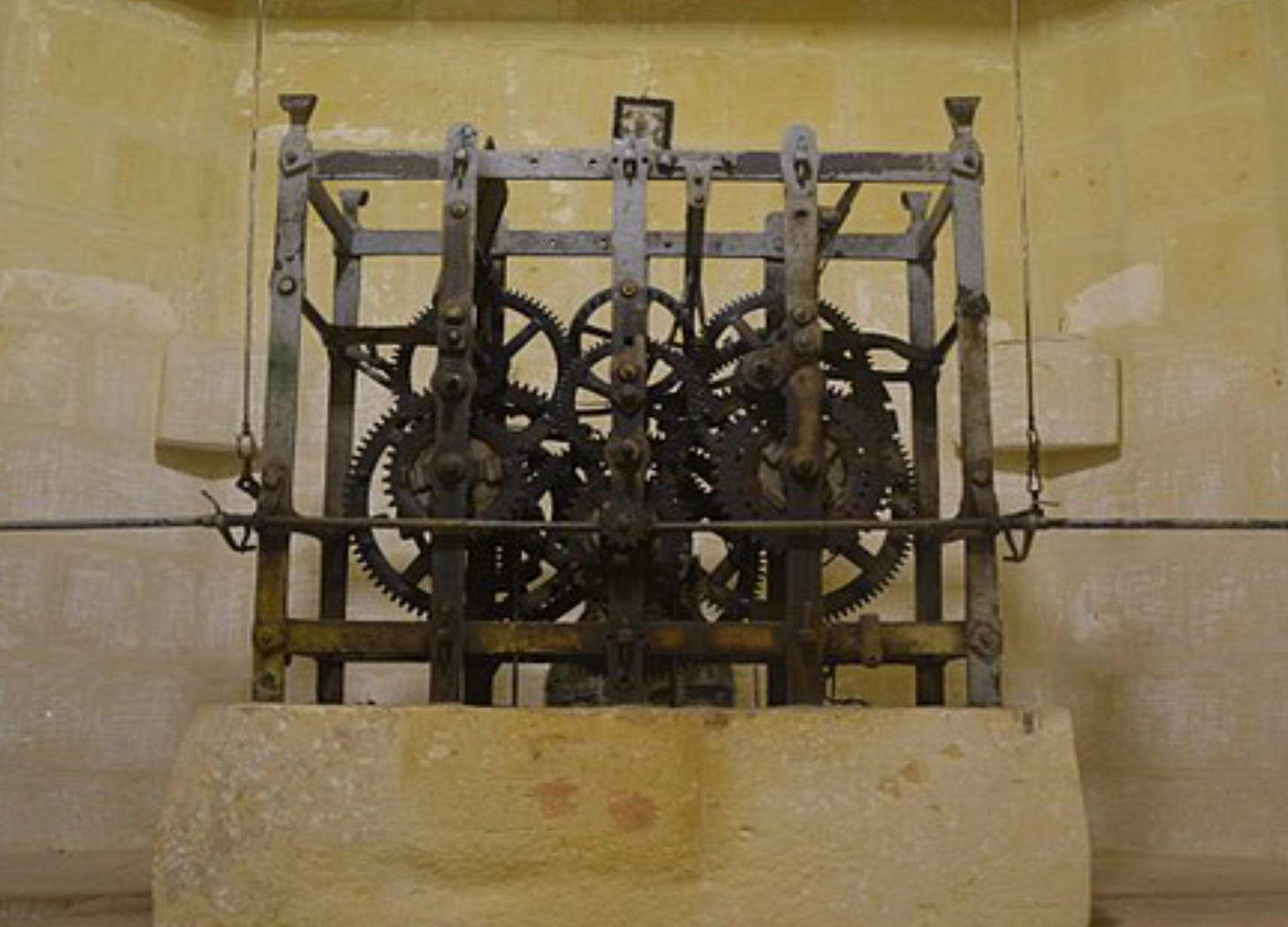
Around 400 BCE, Leucippus and Democritus put forward the idea of everything in the world being broken into tiny parts.* But this potentially mechanistic view didn't take hold in the West until the Enlightenment.
Kant said in 1784, “Enlightenment is man’s release from his self-incurred tutelage. [Tutelage is man’s inability to make use of his understanding without direction from another …] Dare to think! Have the courage to use your own reason! is therefore the motto of the Enlightenment.
It was a noble goal in opposition to the dogma that had gripped human thought in the guise of the Christian church. However, the idea that reason was superior to cultural learning became distorted from its original meaning and intent. And like every new concept, the seeds of its failure were contained within it.
That's because no theory of behavior can encompass everything in life. Existence is ever-changing, and we must adapt and develop new approaches, or we fall.
The Enlightenment wasn’t supposed to disconnect us from the unseen world. When Galileo watched the sway of the lamp above him and noticed the patterns it contained, he had no notion that his observations made him better than his god.
He was just… curious.
But his curiosity led him into a clash with power. Not spirit, not god, but power. The power that governed said that the things he saw could not be, and for him to say the earth was not the center of the universe was an idea that threatened their control of the population. So they demanded that he deny what he had seen.
But the truth didn’t go away because Galileo recanted.
